Las Sistas
Foursisters.Onestarter.Zeroshortcuts.
Slow-fermented sourdough, baked to order by Lissy, Daly, Ingrid and Naty — and delivered to your door FREE while the offer lasts. No factory. No store shelf. No day-old bread.
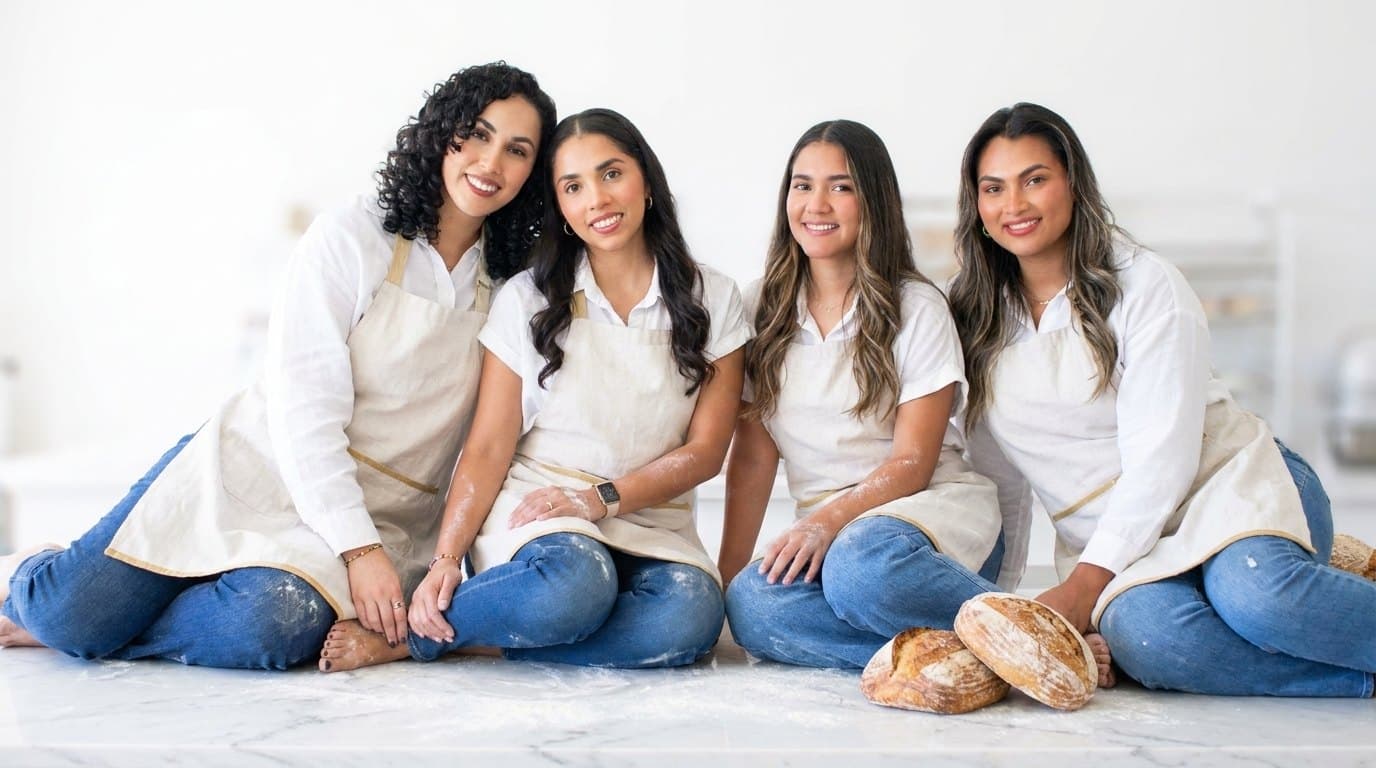
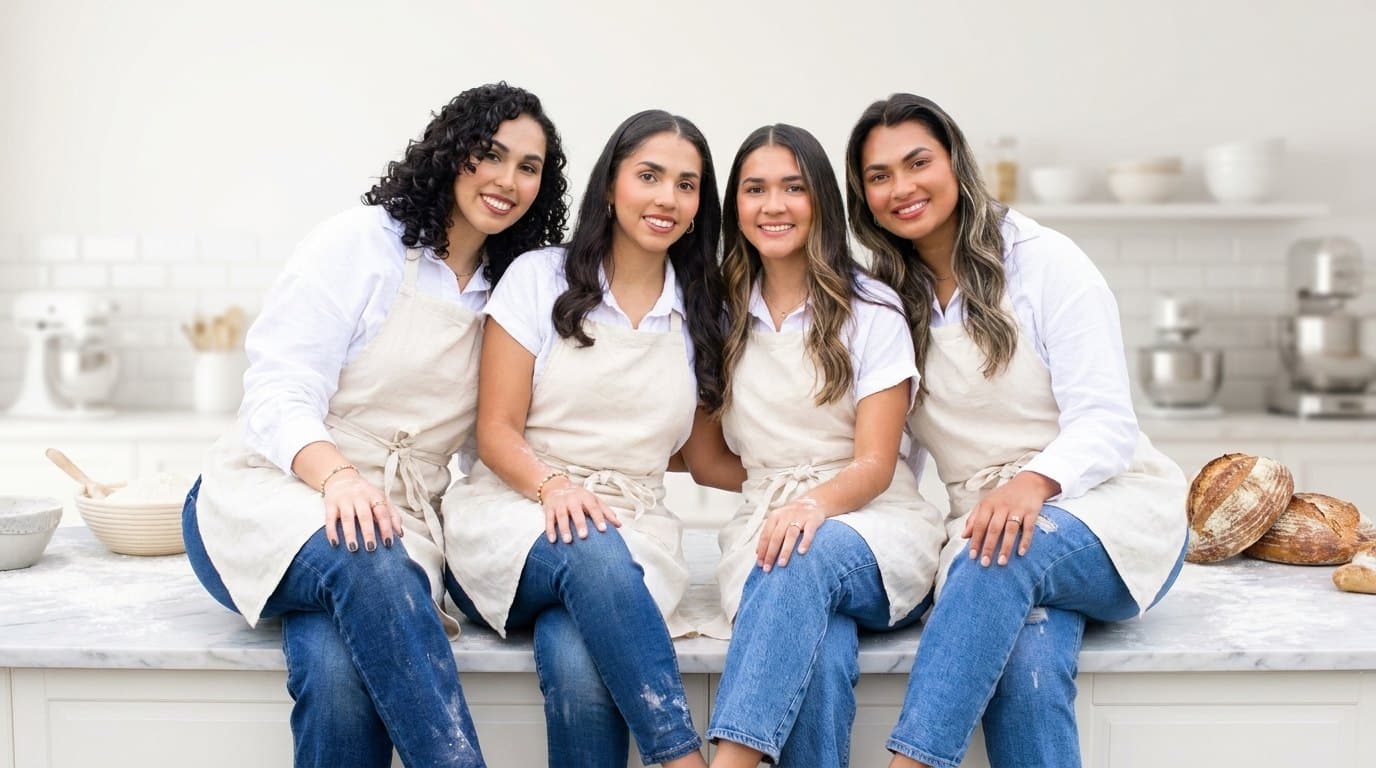
Your bakers · Lissy · Daly · Ingrid · Naty

Lissy
Keeps the starter alive and answers your texts.

Daly
The one who started it all in her Kissimmee kitchen.

Ingrid
Shapes the prettiest scoring in the family.

Naty
Guava & cheese is her doing.
Meet the Sistas
Four sisters. One kitchen. One starter passed hand to hand.
Lissy, Daly, Ingrid and Naty grew up in a house where bread meant somebody was home. Today each of them bakes from the same living starter — so whichever sister bakes your loaf, it tastes like family.
Every loaf is hand-shaped, fermented for more than a day, and baked in small batches with four ingredients: flour, water, salt and time. That is the whole recipe. No shortcuts, no preservatives.
Baked to Order
The Three Loaves
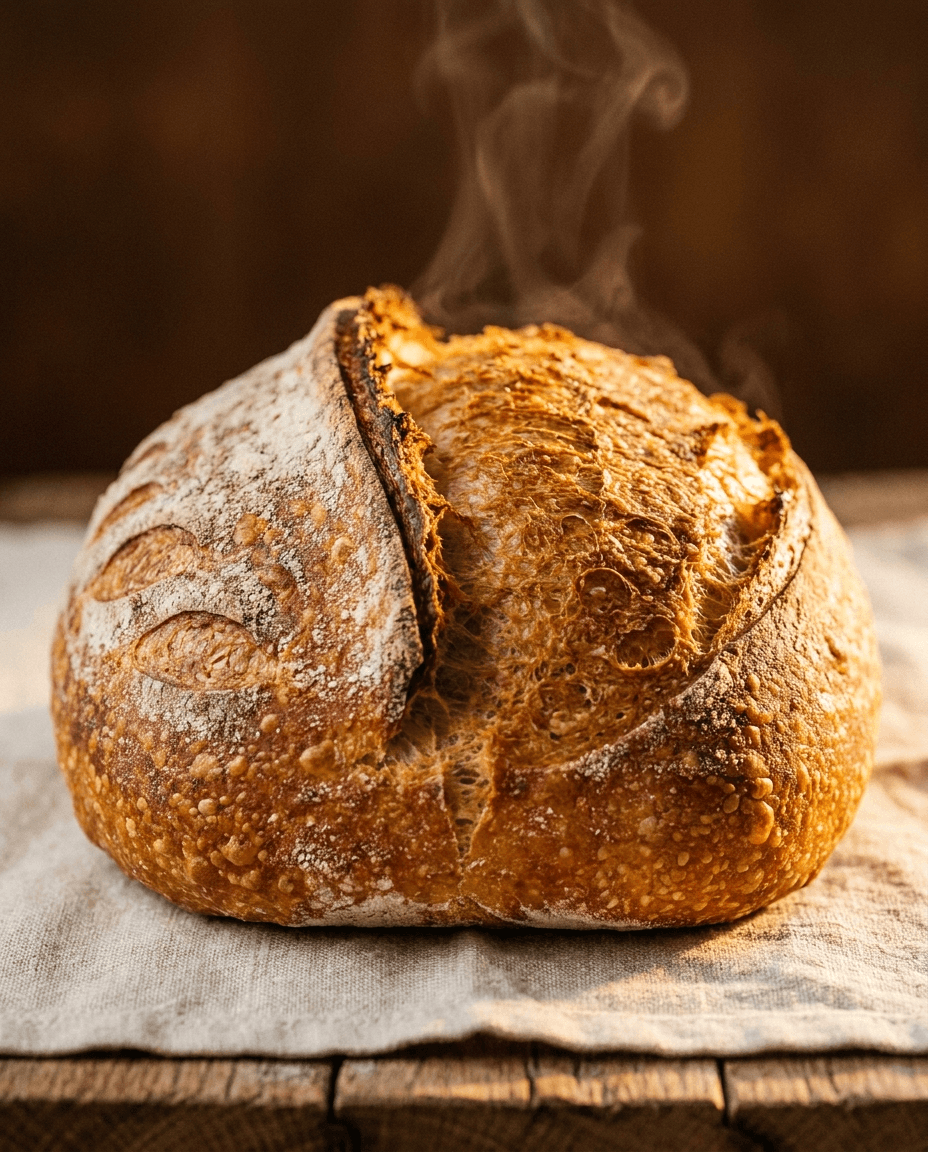
Classic Country Sourdough
$10The everyday loaf. Crackling crust, open crumb, deeply tangy. 24+ hours of slow fermentation.
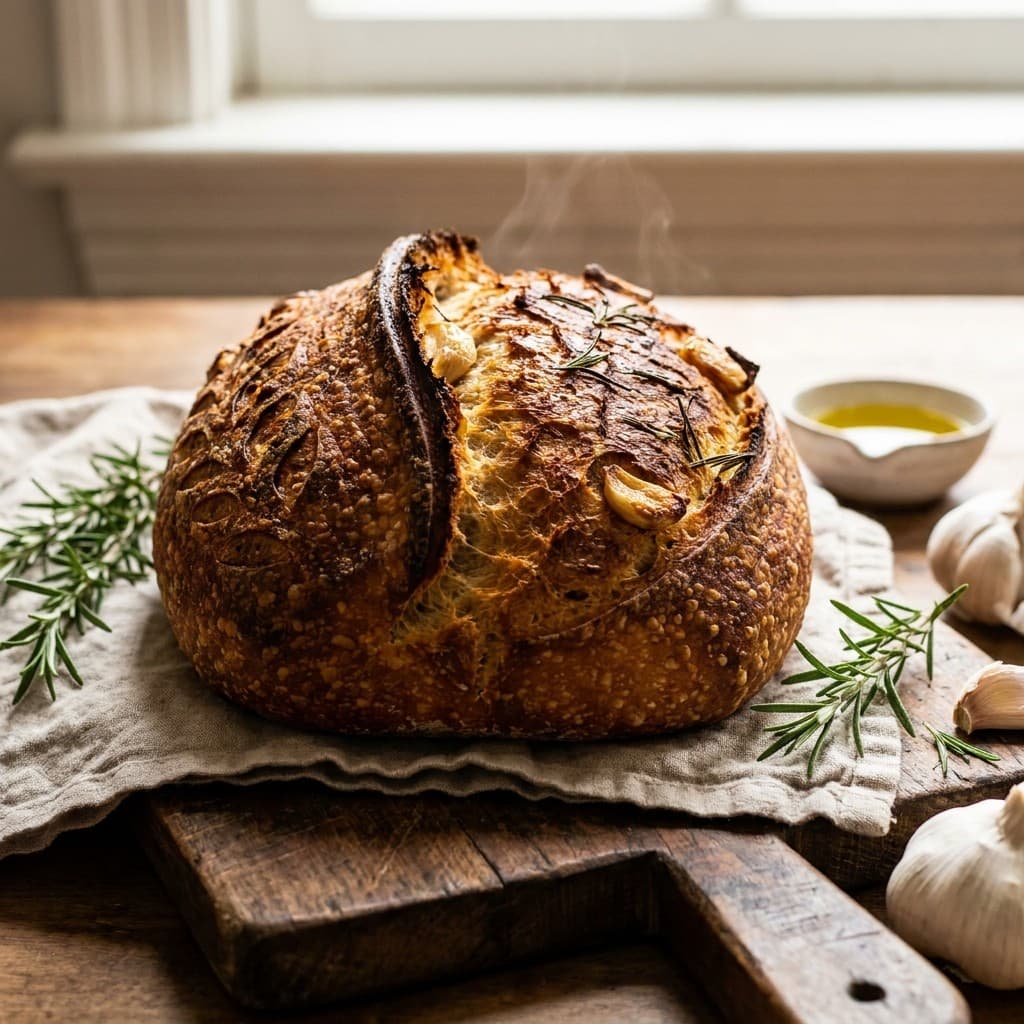
Garlic & Rosemary
$12Roasted garlic and fresh rosemary baked into the crust. Savory, fragrant, made for dipping in good olive oil.
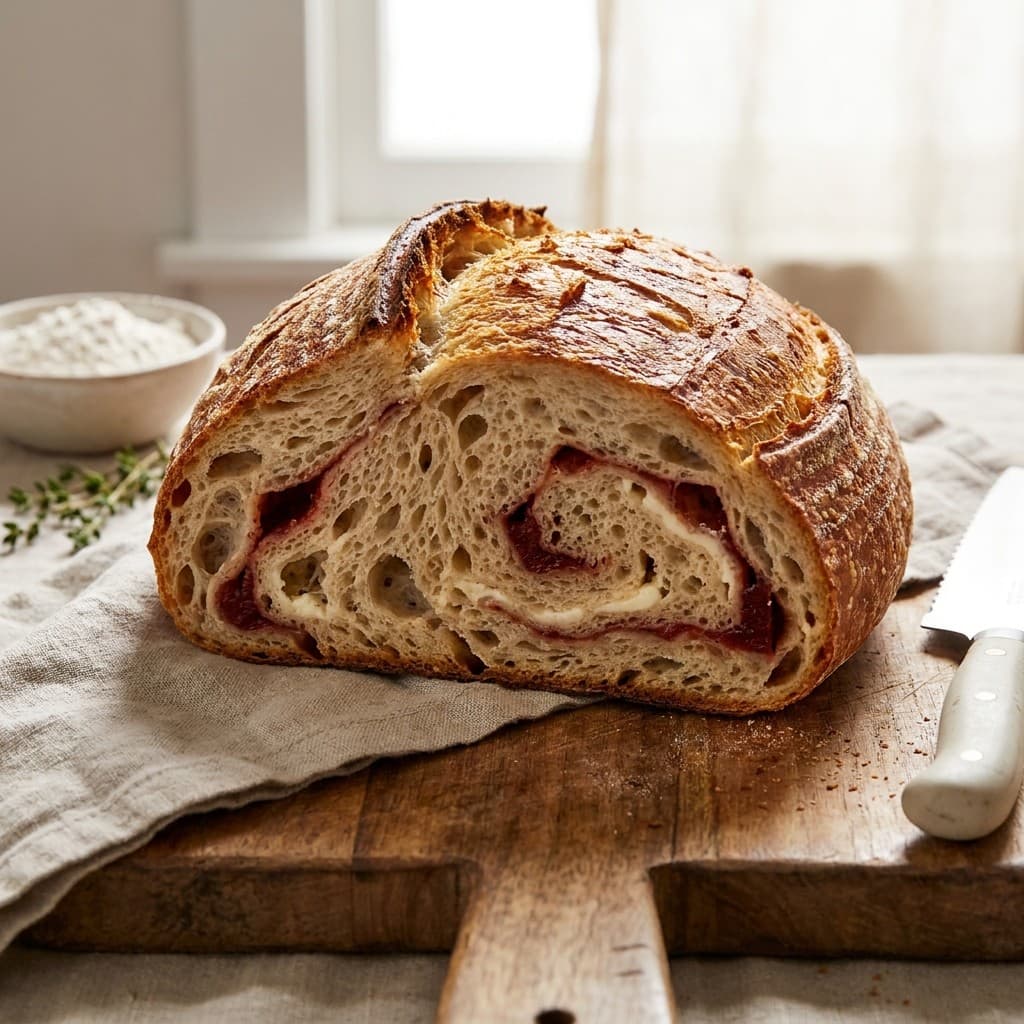
Guava & Cheese
$15The Caribbean signature. Sweet guava paste swirled with creamy white cheese. Pure nostalgia in every slice.
How It Works
Reserve today. Warm bread Saturday.
Reserve online in 2 minutes
Pick your loaves, your Saturday, and the sister you know (or let us pick). No account, no checkout maze.
Your sister bakes it fresh
Mixed, shaped and slow-fermented for 24+ hours, then baked the morning of your delivery. Never the day before.
Free doorstep delivery
Warm to your door in Kissimmee, Manassas or our Puerto Rico zones. Delivery is on us for a limited time — reserve while it lasts.
Why Sourdough
What 24 hours of fermentation does for your bread
Wild yeast and lactic-acid bacteria work on the dough for a full day before it ever sees the oven. Here is what that slow process can change, according to dietitians and published research.
Gentler on blood sugar
Fermentation eats up some of the flour’s natural sugars, so sourdough tends to have a lower glycemic index than white bread — dietitians cite roughly 55 vs. 100 — meaning it may raise blood sugar more slowly.
Easier to digest
The starter pre-digests part of the starches and proteins, including a share of the gluten and FODMAPs, which is why many people find long-fermented bread sits lighter. It is still wheat bread — not gluten-free and not for celiac disease.
Minerals your body can use
Acidity from fermentation breaks down phytate, the compound in flour that locks up iron, zinc and magnesium — so those minerals can be easier to absorb.
Food for your gut
Fermentation creates prebiotic compounds and resistant starch that feed the beneficial bacteria in your gut.
The honest part
Sourdough is bread, not medicine. Peer-reviewed reviews note that lab results are stronger than the clinical evidence so far, and no regulator has approved a health claim for sourdough. What we can promise is simpler: four ingredients, a day of fermentation, and nothing you can’t pronounce.
Sources
- Cleveland Clinic — Is Sourdough Bread Healthy? (Beth Czerwony, RD, 2024)
- University Hospitals — Is Sourdough Bread Healthier Than Regular Bread? (Lizzy Traxler, RD, 2025)
- Frontiers in Nutrition (2023) — Does sourdough bread provide clinically relevant health benefits? (peer-reviewed review)
- Frontiers in Nutrition (2026) — Sourdough vs. yeast breads and glycaemia: a systematic review (PubMed Central)
For general information only — not medical advice. Talk to your doctor about your own diet, especially if you have diabetes, celiac disease or a wheat allergy.